Testing 1...2...3...

This is a test post to verify that the new songwritersinseattle.com website is functional. Lots more to follow - stay tuned!
This is a test post to verify that the new songwritersinseattle.com website is functional. Lots more to follow - stay tuned!
When I went through army basic training one of the exercises was to enter an enclosed room and get “gassed” (tear gas unfortunately). After entering the room and doing several drills with our pro-mask (gas-mask) we were finally told to take it off, breathe deeply, while standing at attention, and stare directly at the drill sergeants behind the protective glass. We would then be excused. There were ten of us in that room and we were told, in no uncertain terms, that not one of us would be excused until all ten of us were staring directly at them. As I stood at attention straining to keep my eyes open I attempted to take a breath but could not. It was as if I had been kicked in the stomach and had the wind knocked completely out of me, so I began raising and lowering my chest to fake my breathing. The seconds were slowly ticking by, as the sergeants were laughing and guffawing at us behind the protective glass. Then, just before we were to be released, the guy next to me began doubling over and nearly hit the floor. With lightning like reflexes I caught him, pulled him back up, and held his head straight toward the DI’s in the booth. We were finally released. I had saved the day, at least for me and the guys I was with. Of course I didn’t have to “waive my own flag”. The sergeants had all seen what happened, the guys I was with knew what happened. All I had to do was work up my best “Clint Eastwood” voice and start practicing phrases like; “I did what I had to do” or “The training just took over”…then I watched the video tape of it.
First off I looked way less cool (as in, “not at all”) then I remember, more like a fish wriggling around out of water. Instead of the proud soldier, standing at attention, staring down the drill sergeants and daring them, by my calm demeanor, to leave me in the “tank” as long as they wanted. I was more like the “little school boy” with his knocked knees and desperate eyes saying, “Oh please, oh please, oh please let me out”. In the video the guy next to me, I had thought had nearly collapsed, had more like, slightly bowed, and as he was bringing himself up to attention instead of the “Rambo” reaction I thought I had, I merely began flicking the side of his leg as if to shoe a fly off it. I’m not really sure if he had even felt it.
What was going on in my head and what was actually happening on the “stage of life” were obviously two different realities. What we feel we’re projecting when we’re performing and what the audience is seeing can be just as dramatic.
Stage Presence
There’s a ton of great songs within this group. When we perform, we should have a stage presence that conveys this. There’s a lot of professional tips on-line. Go ahead and do a search…
…but in the meantime here are a few pointers from what I’ve noticed:
1. Keep your eyes open
Get out of your own head and join the show. It almost looks like you don’t want to be with us when you keep your eyes closed.
2. Smile more
Unless it’s part of your act not to, be sure to smile. You look better, people like you more, and the music gods will bless you.
3. Look at the audience
They came to watch you, you should watch them back. If you invited somebody to your house, and didn’t look at them the whole time they were there, that would be really weird. This also builds on the first step “Keep your eyes open”.
4. Convey the emotion of the song
When you perform you should convey the emotion of whatever song your singing, happy, sad, mad, bored, depressed etc. with your body and face. From a slight nuance to a mournful wail…it helps us know you mean what you’re singing.
5. Don’t read your music off a music stand, it looks really stupid
If you need to read them you haven’t practiced enough. If it doesn’t matter how much you practice and you still need to read them then hide them somewhere. e.g. on the back of a monitor or speaker, on the floor, invest in a teleprompter, anything…just loose the stand. Some people seem to get away with it but you don’t want the audience’s forgiveness, you want their admiration.
*On a side note; If you’re playing in front of members at the general meeting that’s fine, we all understand, but if you’re performing at a show…don’t do it.
6. Watch your favorite bands perform live and see what they do
It’s possible they go into a mesmerized state and stay there for their entire show but it’s more likely they are making some obvious connection with the audience and almost a suckers bet that they did not get to where they are playing as stage zombies (except for that famous band “The Stage Zombies”)
7. Practice in the mirror, shoot video or both
You practice your guitar, your voice, your songwriting…time to practice your stage presence. If your planning to have pictures taken, which should be a given, they always look better if your eyes are open (at least most of the time), you’re smiling (at least some of the time), and whatever song your singing looks as if your conveying the emotion of the song with your face, posture, etc. anywhere from slight nuances to extreme tantrum like behavior.
So Anyway…
…keep practicing in the mirror, honing your performance, watching what works for you in other performers and “borrowing” their moves. Sure you want the audience connection to be natural. As natural as say…your guitar playing, or singing? Which most performers practice for years.
Many of the writers in this group are good to great songwriters. Many of us are bad to decent performers. If you are performing your good to great music you should have an act that does justice to your songs.
Work on that stage presence.
Now that you have your music in your hand you have a tangible product to sell. One VERY important thing to remember is that you are not selling simply music, you are selling yourself. Next up are most likely the hardest, most time consuming, the most confusing and the most frustrating- Marketing. Take a deep breath, and start here:
1. Build a website with your name/band as the domain. It can simply be a blog with a calendar on the side and a place to listen to music but make sure it is www.whateveryoucallyourself.com Make sure you get Google analytics! a.http://www.hostbaby.com/ is a great affordable site builder for musicians b.http://wordpress.org/ is also a good tool c.There’s a million and one site builders out there, find the best one for your needs. 2. Develop your elevator pitch. There’s a great exercise in Arial Hyatt’s book Music Success in Nine Weeks http://www.musicsuccessinnineweeks.com/ 3. Build your EPK. Start with a digital kit (we’ll get into the physical kit later). Sonicbids has greatly improved their service and helps you build your kit and get more than just gigs. http://www.sonicbids.com Another digital press kit service is http://www.reverbnation.com/main/overview\_artist?feature=rpk The advantage to sonicbids is that they are the service used by SXSW and numerous other festivals. You have to be member (even if only temporary) to submit to these. a. One product worth purchasing is a review from http://www.reviewyou.com/ As a new artist, it’s incredibly difficult to land a review or any press. It’s one of those you need press to get press. Review You fills that gap and helps you get your footing. 4. Find your target market. It’s a big, scary world and narrowing down the field is incredibly helpful and will keep you sane. First things first- focus on your local city and/or region. Two great services to help you find your target demographics with your local market: a. http://www.jango.com/ They have an analytics service that informs you as to what artist stations you do well with, etc. b. http://www.soundout.com/ Rates your music and breaks down your demographics at a very affordable price. 5. Begin a mailing list. This is worth its weight in gold. Social networks will change, and people fall off and on the face of the earth at any given moment but if you have their email, you can almost always keep track of them. a. Fanbridge is quite possibly one of the best tools to use. https://www.fanbridge.com reverbnation also offers a similar service http://www.reverbnation.com/main/overview\_artist?feature=fanreach b. A fan collector is a great tool to use to give an incentive to fans to get their email address from them. Both fanbridge and reverbnation offer a variation of this. Another newer tool to use is Noisetrade http://noisetrade.com/ You can sell your music here BUT you can also offer free music for email addresses and a little extra social media promotion.
6. Get started on the social scene. Start tweeting, facebooking, youtubing or whatever the hottest social media trend is. Create a social media schedule and stick to it so it becomes a part of your everyday life.
Next up is the list of things to focus on to expand your career and get to the next level. Try setting aside 15 minutes a day to do each or assign one of each item to a different day of the week to keep it more manageable. 1. College radio promotion 2. Publicity 3. Live performances 4. Internet marketing 5. Social media development 6. CD and merchandise sales Different tactics and resources work for different people and genres. I would love to tell you what works and what doesn’t but it changes every day and the same thing that works for one act may not work for the next. Below are a few recommendations and articles to get you started, the rest is up to you.
a. College Radio promotion http://www.indiebible.com/icb/radiopromotionarticle.shtml http://blog.discmakers.com/2011/01/how-to-run-your-own-diy-college-radio-campaign/ b. Publicity - Research local events in your area. Check out the book it! By Paula Froelich http://www.amazon.com/Nine-Secrets-Rich-Famous-That/dp/1401352103 c. Live Performances - Start small, try gig swapping, promote and practice, practice, practice. d. Internet marketing - Ariel Hyatt is the hands down expert on this http://arielpublicity.com/ e. Social media development - Engage, keep your fans healthy and listen to Ariel Hyatt http://arielpublicity.com/ f. CD and merchandise sales - keep track, sell items both online and physically and get creative.
Remember that these strategies and resources are a constant work in progress, but consider this your go to checklist to get you started. Good luck!
Cast your mind back to the year 2000. Remember it? I do, some of it, and one thing I did late that year and early 2001 was to write a song called “Saturday.”
“Saturday” is one of the more upbeat songs I’ve come up with, though the lyrics are a classic 90’s ironic slacker take on getting up late on a Saturday and feeling like you’re wasting your life. Ahh, to be 22 again. No thanks.
I played it at shows for a while and maybe tried to record it at some point back then, I’m not sure. I know I played it live at Aurafice Cafe on March 16, 2001 because I had an mp3 of it on my website for a while. Coincidentally that’s how I met Seth Howard, he somehow found my site back then and emailed me. We still hang out all the time.
Later I decided to record it “for real” just to have a memory of this song I’d written and I thought it would be easy and fun to do. I started recording in June 2005, and finished it just this past October 2017.
What took so long? I can report I did not work on it continuously for 12 years. Instead I’d been picking up the audio project (in Cakewalk Sonar, RIP) every few years and messing with it, then dropping it again when it got tedious. It got tedious for one reason mainly: drums.
The drums started easy: with a Boss DR-202 drum machine like this one:
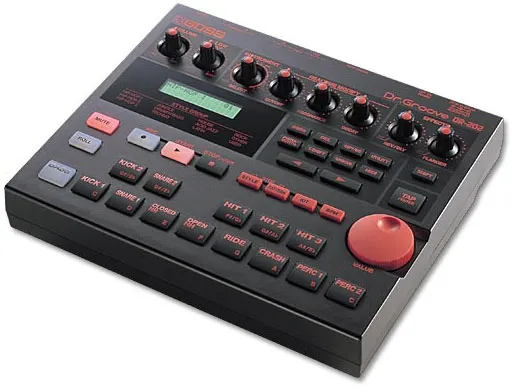
I’ll usually start a recording with scratch guitar and vocals on top of fake drums (acting mainly as a metronome that’s more fun to play along with), then add real drums, then redo the other tracks to establish their “final,” better versions that are also more cohesive with the “final” drums. I used to get fake drums from the DR-202 til I sold it in favor of software plugins. I kind of miss it now.
This song “swings” and getting that beat right on a drumkit wasn’t easy for me. In fact I never got it right, but rather recorded some takes and then cut and pasted them up in Sonar. I remember spending hours and hours on the cutting and pasting in late 2007, at which time I also recorded most of the other parts (vocals, bass, guitar solos). Even after that though the drums weren’t right.
I also took some sideways detours. This was shortly after I moved to Madrona and Seth (aforementioned) suggested I try building a plate reverb, presumably because one would fit in the basement. I tried building one and spent a lot of time at it, and in fact there are 2 noisy audio tracks (muted) of my vocals going through the plate.

I did not use those. There are also muted samples of random TV commercials. For fun? No to those too.
I know I picked the song up again at least 3 more times months and years apart, to try mixing and remixing it. Still not right.
Things picked up in 2014 when I attended some sort of Sonar seminar/road show and learned that you could easily extract MIDI transients from audio tracks, and decided I should try that. I did, and it worked. What this did was to create MIDI containing the information of which drum was hit when in time and how hard.
Now I could replace my kick, snare and toms with samples and I could move them around in time, make them louder, quieter, etc. I cut the low end out of the drum overhead tracks so that you can only hear the cymbals in those, and now the whole kit comprises sampled drums along with the “real” (edited, from my earlier work) cymbals.
[caption id=“attachment_1409” align=“alignnone” width=“600”]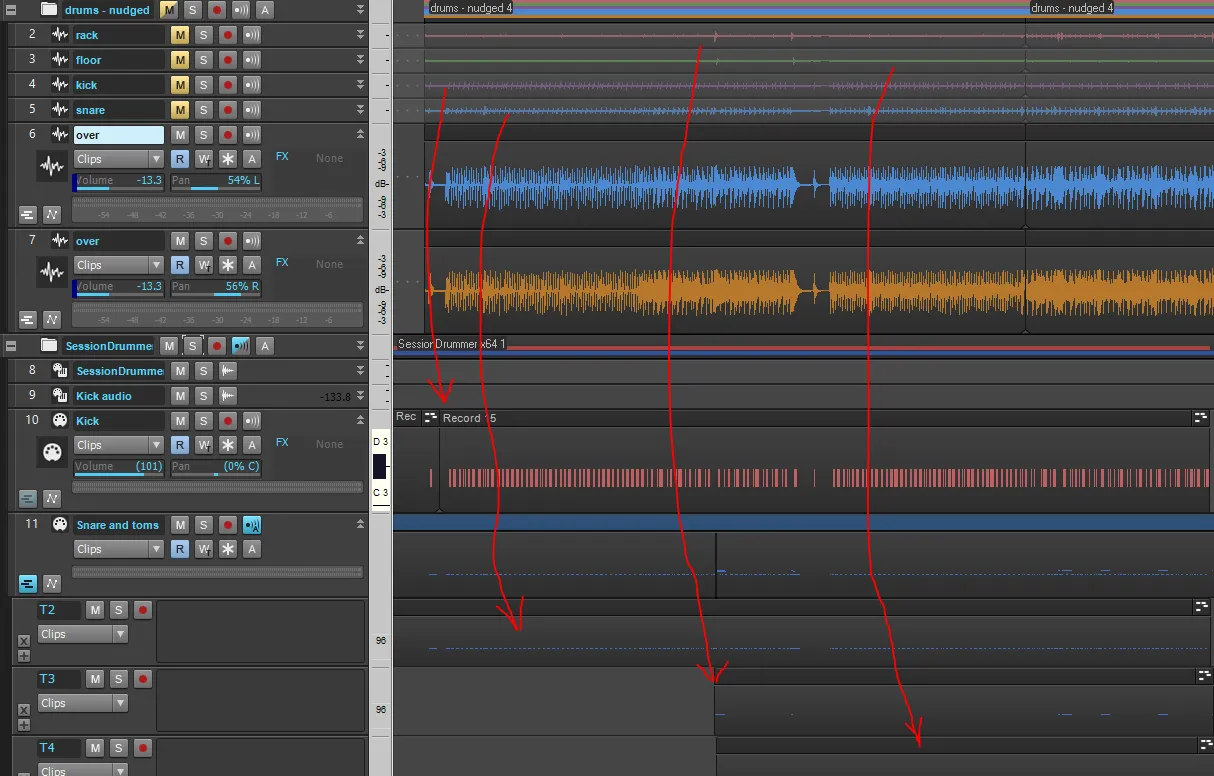 wavs to MIDI[/caption]
The only problem is that the MIDI captured my playing, after edits, which still wasn’t good, as far as timing and feel. With MIDI you can manipulate notes, in this case drum notes, and you can apply processes to them en mass such as “quantize.”
Quantizing moves notes to set locations in time, like say, to the quarter note. All notes that are “pretty close” to a quarter note location in time will get moved to that nearest quarter note as part of the quantize process. This makes it sound more like a machine playing but it’s better than a not-so-good drummer.
So I tried quantizing, but I could not get it to work right. For one thing, the version of Sonar I use (X3) has a lousy user interface. It represents decades of tacking new features onto existing features without ever designing for the whole experience, and then moving things around so that you can’t find the things you use all the time because they’ve been moved somewhere else. Like the quantize function. But then also, the song swings, which apparently is hard to quantize, and it just would not work.
So then another three years went by til I picked it up again and just moved the drum notes around by hand. It took a long time.
[caption id=“attachment_1407” align=“alignnone” width=“455”]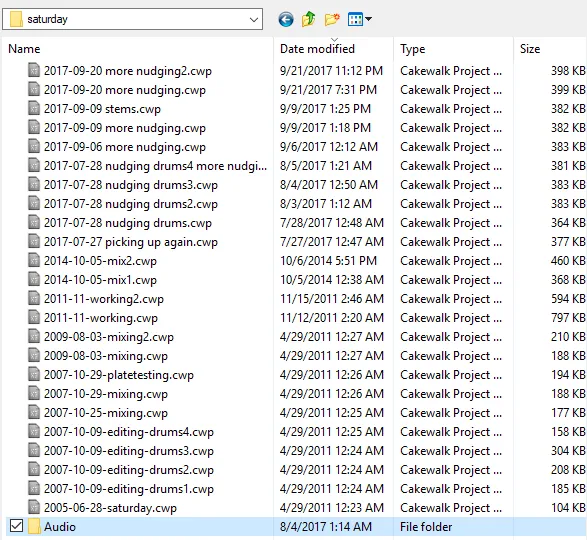 so many edits…[/caption]
Then I sent it to mastering, and it came back with the kick drum really pronounced in the mix, so I could really hear that it still wasn’t right. So I worked on it some more and sent it back to mastering. And it was still bad. So I worked on it more, and then it was done.
I should take a moment and acknowledge that this was not good time management. I should have tried again with a real drummer, or programmed a drum machine, or started over entirely. I swear 95% of the time spent on this song was on the drums and most of that was just the kick drum. Which ended up too quiet in the mix! I’m going to try not doing that again.
On the plus side, I got to cross it off the list and put it on an EP. Hear it on Bandcamp.
So for this month I have decided to write about creating music that tells a story or at least generates a specific type of feeling or emotion. It seems to me that I frequently encounter songwriters who have a melody and some great lyrics, but the music falls flat and doesn’t really support the feeling, emotion, the overall vibe of what the lyrics are saying.
In my mind…my opinion, I believe that the entire song –the instrument(s), the melody for the vocals, the tempo, the specific sound choices; should all work as a team to generate the feeling, the emotional content of a song. I am sure that most of us have heard an instrumental piece that really painted a picture in our mind’s eye. You’re listening and mentally visualizing a scene, a scenario, like a short film in your mind. Classical music I’m sure does that for many.
It just doesn’t strike me as effective when someone is strumming a basic C-D-G progression in support of their lyrics about having a rough childhood watching their alcoholic father beat up their mother, or a forbidden passionate exchange between lovers who are cheating on their spouses (Does Country music come to mind?) Well maybe so, but these subjects can be found in any genre of music, and perhaps country music comes to mind when I mention C-D-G and that subject matter for lyrics.
Anyway the point I make is to say that as songwriters, we should be seeking to create the intense feelings of those subjects for the listener with the melody, and the instrumentation to give the listener our impression of those feelings & emotions to support the words as a whole, working from the standpoint that the listener may not be able to clearly hear and understand the lyrics.
C-D-G can be used but we need to be more inventive in our approach to describe with audio the intense passion of the lovers, or the intense pain and strife of a child watching their mother being physically abused. So maybe you would choose C major –D minor –G minor 6, then play the chords as arpeggios instead of simply strumming as an example.
This is where knowledge of music theory can be helpful, although not required. In fact I have met people who have extensive theory knowledge but for some reason are still not grasping how to get the desired emotion or feeling from their instrument and/or voice, and yet there are numerous examples of famous professionals who can’t read music and don’t know theory, who can make you cry like a baby with a song. (Although some make you cry because they are so bad!)
While it is in my mind, I want to point out that we should maybe stick to the emotions & feel that actually related to the words. Why would you create a happy sounding pop type of song (“M-bop” by Hanson for an example) to go with the lyrics about spousal abuse? This I don’t understand or agree with. It doesn’t makes sense to me, but there is an example of this too (a terrible example! in my opinion) – the popular song “Pumped up kicks” by the group “Foster the people”. A song with lyrics about a school shooter.
I have asked numerous people I have found humming or whistling along with this happy-sounding pop song - do you know what this song is about? All of them answered no. So I told them and they were appalled. Here are lines from the chorus:
“All the other kids with the pumped up kicks You’d better run, better run, out run my gun All the other kids with the pumped up kicks You’d better run, better run, faster than my bullet”
You can do whatever you like in the name of artistic expression of course, but I believe that expressing a happy vibe about school shooting is in very bad taste. This perhaps resulted from ignorance or maybe was intended to capture vibe of the shooter (why would you want to promote that sickness?) or maybe simply to sell records – which is in extremely poor taste. Especially in today’s climate. This song is influencing how many of our youth? Do they need encouragement to commit more senseless acts of gun violence?
I certainly would have chosen a vastly different musical approach to that subject.
So I’ll wrap this up now by saying that the point is to find what moves you and your audience emotionally, to reproduce the “true” feelings and emotions in your head and heart – with your instrument(s) and/or voice.
Then you have the makings of a great song. Thanks for reading!